
After the flood, Noah, his wife, his three sons, and their wives were the only preserved remnant of humanity (Genesis 7:7; 1 Peter 3:20). From these eight, God repopulated the earth (Genesis 9:19). As generations passed, the descendants of Japheth, Ham, and Shem grew into many peoples, yet they still shared one language and one speech. In defiance of God’s mandate to fill the earth (Genesis 1:28; 9:1), they chose to settle together and build a city with a tower reaching into the heavens, hoping to make a name for themselves and preserve their unity. But God judged their pride and disobedience. By confusing their language so they could no longer understand one another, He halted their project and scattered them across the face of the earth, forming the world’s many ethno‑linguistic peoples (Genesis 11:1-9).
Spiritually, Scripture teaches that the whole world lies under the influence of the devil, whom it calls “the god of this world” (1 John 5:19; 2 Corinthians 4:4). Jesus—the promised blessing to all nations (Genesis 22:18; 26:4; 28:14; Galatians 3:8, 16)—came to free humanity from the devil’s dominion and bring them into His kingdom. Simeon recognized this when he declared that the child Jesus was God’s salvation for both Gentiles and Jews (Luke 2:31–32). Through His death and resurrection, Jesus triumphed over the devil and announced, “All authority in heaven and on earth has been given to Me” (Matthew 28:18). With that authority, He sent His disciples into all the world to proclaim the gospel to every creature (Mark 16:15), commissioning them to peoples and lands already under His sovereign rule.
How The Gospel Went Out To Nations
Christ instructed His disciples to remain in Jerusalem until the Holy Spirit empowered them, after which they were to take the gospel from Judea to the ends of the earth (Acts 1:8). They stayed for a time, but when a great persecution arose after Stephen’s martyrdom, they were scattered throughout Judea and Samaria, preaching the word as they went (Acts 8:1, 4). Through this scattering, churches were planted across the Roman world—in Antioch and Damascus, throughout Galatia by Paul and Barnabas, in Macedonia by Paul, Silas, and Timothy, in Corinth and Ephesus, and even in Rome, likely begun by believers traveling from Judea.
Later, during the first Jewish‑Roman war and the siege of Jerusalem (AD 66–70), Christians again dispersed just as Jesus had warned them to flee when the city was surrounded (Luke 21:20–24). This second dispersion further strengthened and established the churches in Gentile lands.
Christianity reached North Africa very early—by the 1st or early 2nd century AD—forming some of the oldest Christian communities in the world (Latourette, 1975). Early tradition holds that Mark the Evangelist brought the gospel from Jerusalem to Alexandria around AD 50 (MacCulloch, 2010). In the 7th century, Christianity retreated under the advance of Islam, though it remained the chosen religion of the Ethiopian Empire and persisted in pockets across North Africa (Brown, 2013). Much later, Christianity entered Sub‑Saharan Africa through Portuguese contact in the 15th century, and in 1652 the Dutch established the beginnings of the Dutch Reformed Church in the south (Fletcher, 1997).
Christianity began spreading into Europe in the 1st century AD through trade routes and early missionary work (Latourette, 1975). Its growth accelerated after Constantine legalized the faith in AD 313 and after it became the official religion of the Roman Empire in AD 380 (MacCulloch, 2010). Over the following centuries, Christianity moved beyond Rome’s borders—into Ireland and the Frankish kingdom in the 5th–6th centuries, across Anglo‑Saxon and Germanic lands in the 6th–8th centuries, and into Scandinavia, Eastern Europe, and Lithuania between the 9th and 14th centuries. By the end of the Middle Ages, Christianity had largely replaced pagan traditions and shaped the cultural foundations of Europe (Fletcher, 1997).
Christianity reached Asia very early, with Christian tradition holding that Thomas the Apostle brought the gospel to India in AD 52 (Latourette, 1975). Centuries later, between the 5th and 6th centuries, the Church of the East carried the faith eastward along the Silk Road, establishing communities throughout the Persian Empire and reaching China by AD 635—a presence later confirmed by the Xi’an Stele of AD 781 (MacCulloch, 2010). From the 16th century onward, European maritime missions, especially those of the Jesuits, expanded Christianity further into East Asia, Japan, and Southeast Asia (Fletcher, 1997).
Christianity entered Latin America in 1492 with the arrival of Christopher Columbus (Latourette, 1975). Spanish and Portuguese colonizers introduced Roman Catholicism as a central part of their imperial expansion, bringing missionaries alongside soldiers and settlers (MacCulloch, 2010). Throughout the 16th century, missionary orders such as the Franciscans, Dominicans, and Jesuits established missions, churches, and schools across the region, embedding Catholicism deeply into the cultural and religious life of Latin America (Fletcher, 1997).
Christianity reached North America in waves, beginning with Norse contact around AD 1000, though this early presence left no lasting Christian communities (Latourette, 1975). A permanent Christian presence emerged with European colonization in the 16th and 17th centuries. Spanish Catholics established missions in Florida (1565) and the Southwest, British Protestants founded settlements in New England and Virginia in the early 1600s, and French colonists introduced Catholicism to Canada and the Mississippi Valley (MacCulloch, 2010; Fletcher, 1997).
The World Today
Today, more than 8 billion people belonging to over 10,000 ethnic groups living within more than 206 recognized nation‑states and territories occupy the earth. Nations worldwide do not share the same political or socioeconomic structures. World governments operate under several major political systems. Democracies—“rule of the people”—allow citizens to participate directly or through elected representatives. Monarchies place authority within a hereditary ruling family. Oligarchies concentrate power in a small elite whose influence may come from military strength, wealth, or similar advantages. Authoritarian governments rise without the free choice of the people and often restrict participation and dissent. Totalitarian regimes extend this control even further, seeking to regulate nearly every aspect of public and private life (Types of Political Systems, 2016).
Economic systems also differ across nations and territories. Some nations operate under command economies where the government directs production, distribution, and pricing rather than allowing supply and demand to operate freely. Others embrace market economies where private enterprise and market forces guide economic activity with only minimal state regulation on key sectors. Many countries adopt mixed economies, combining market freedom with government oversight. A traditional economy is shaped by long‑standing customs and survival needs, relying heavily on natural resources and often trading raw materials for finished goods (“Development,” n.d.).
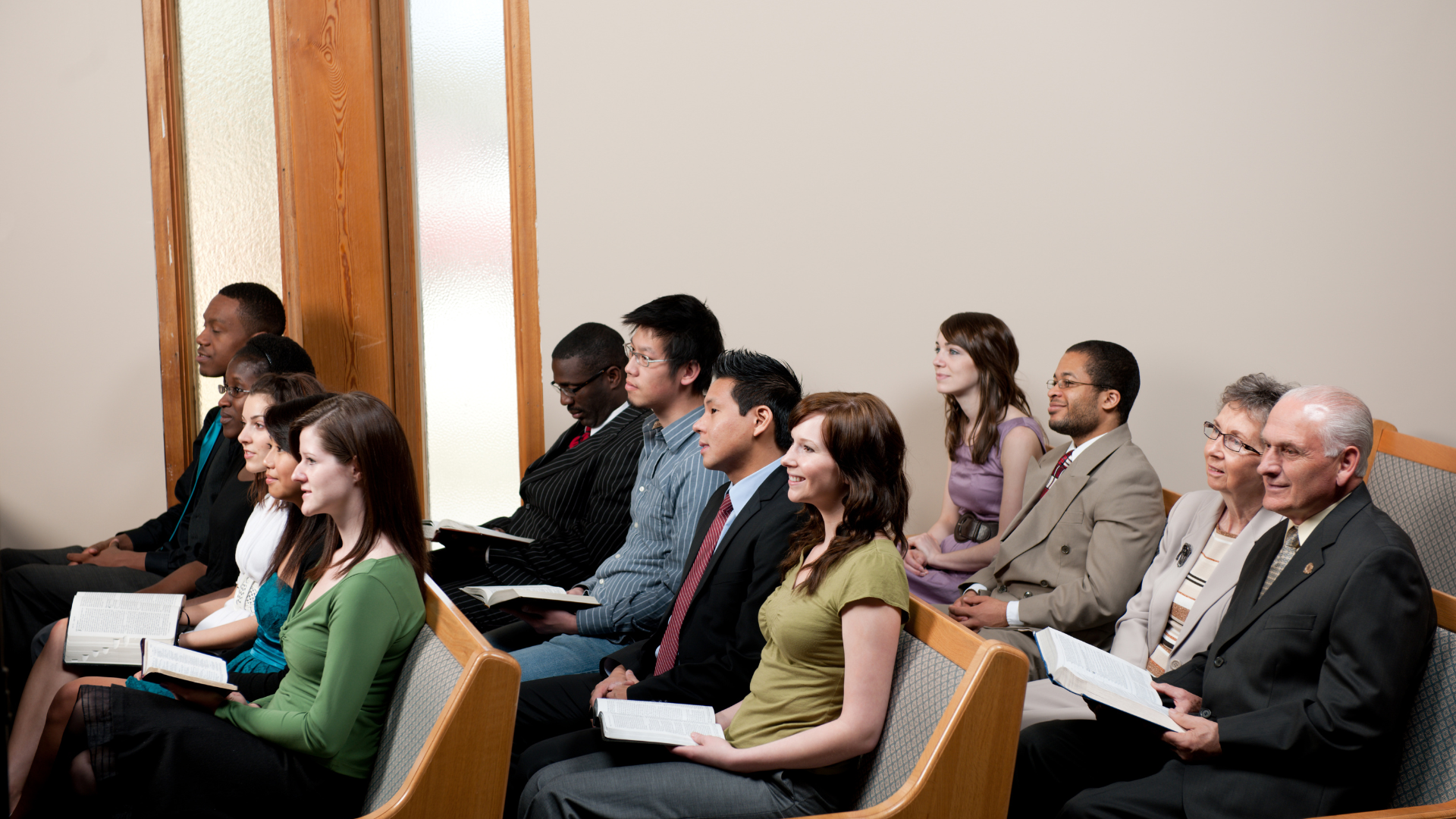
No political or economic system is perfect, yet each shapes the nations where people live. Still, the gospel of Jesus Christ has reached peoples of every ethnicity, across every kind of government and economic condition. Today, more than 2.5 billion identify as Christians, and regardless of background, culture, or living condition, they share one faith and one hope.
Paul teaches that all Christians have been brought near by the blood of Christ and welcomed into God’s household (Ephesians 2:11–13). Through Christ, believers now have access in one Spirit to the Father, becoming fellow citizens with the saints and members of His household (Ephesians 2:18–19). Whether Christians live in poor authoritarian nations, wealthy democratic societies, or communist states, they belong to one household—one God, one Head, one Spirit, one Faith. The household of God is global.
What’s Our Common Faith?
Our common faith is this: God created all things, visible and invisible (Genesis 1:1; Colossians 1:16). He made humanity for His glory, yet humanity sinned and falls short of that glory (Isaiah 43:7; Romans 3:23). Jesus Christ—God incarnate, born of a virgin (John 1:14; Matthew 1:23)—came to save sinners and redeem them to the Father (Matthew 20:28; Titus 2:14). He was crucified, died, and was buried; on the third day He rose from the dead (1 Corinthians 15:3–4) and now lives forever at the right hand of God the Father (Acts 2:33; Hebrews 1:3).
Christ entrusted His disciples with authority to proclaim the gospel to the whole world (Matthew 28:18–20; Acts 1:8). God sent the promised Holy Spirit, who comforts, counsels, and empowers the Church (John 14:16–17, 26; Acts 2:1–4). The Lord calls us into the communion of believers (Acts 2:42; Ephesians 4:4–6). Jesus will return for His Church (John 14:3; 1 Thessalonians 4:16–17). The present age is passing away (1 John 2:17), and Christ will make all things new (Revelation 21:5). We will live with Him in the new heavens and the new earth (Revelation 21:1–4).
This is our common faith and hope—this we believe.
The State of the Household
The household of God continues to grow, just as Daniel saw in his vision of a stone not cut by human hands striking the kingdoms of this world and becoming a mountain that fills the whole earth (Daniel 2:34–35). That vision is unfolding even now. Christians—the messengers entrusted with the gospel, are taking it to the ends of the earth as the Holy Spirit brings the growth (Matthew 28:19; Acts 1:8; 1 Corinthians 3:6).
Yet for many believers, practicing their faith is a crime. Some are persecuted by their own families, targeted by their communities, or punished by their governments. Others live in poverty, conflict zones, or disaster‑stricken areas. Christians in safer contexts who do not face such trials may struggle to imagine the weight their brothers and sisters carry—sometimes out of limited knowledge, sometimes out of indifference.
Contemporary Christianity has often conditioned believers to expect comfort, ease, and a “feel‑good” message that avoids hardship and treats trials as interruptions rather than expectations. Yet the Master of the household told us plainly, “In this world you will have tribulation” (John 16:33). He calls us to take heart because He has overcome the world. Church history bears witness to this truth: from Stephen, the first martyr stoned in Jerusalem; to the early Church persecuted by Rome; to the Coptic Christians beheaded on the Mediterranean shore in 2015; the Church has endured. Poverty and disease have also been constant companions on the Church’s journey, even as God’s household has continued to grow.
Together through it all
How then should believers share one another’s burdens? God calls His household to faithful unity in Christ. Because the eye cannot say to the hand, “I have no need of you,” we must stand together in prayer (1 Corinthians 12:21–26). If one member suffers, all suffer together; if one is honored, all rejoice together. We pray for courage, endurance, and strength for believers everywhere.
In addition to prayer, Scripture also calls for generosity. Paul urges believers to do good to all, especially to those of the household of faith (Galatians 6:10). He commends the Philippians for their “partnership in the gospel” when they shared in his trouble and supported his ministry (Philippians 4:14–18). He also praised the Macedonian churches, who, despite extreme poverty and affliction, gave joyfully and sacrificially for the relief of the saints (2 Corinthians 8:1–5). Today, believers have many ways to support the work of Christ. Give according to your means, with a cheerful heart. Give to bless those in the household of God.
The Great Family Reunion
Our mission today is to make disciples of all nations (Matthew 28:19). But when the Father’s appointed time comes, Jesus will return for His own, and there will be a great family reunion. John saw a vast multitude in heaven that no one could number, from every nation, tribe, people, and language, standing before the throne and before the Lamb (Revelation 7:9). “Blessed are those who are invited to the marriage supper of the Lamb” (Revelation 19:9). The marriage supper of the Lamb is a family‑only gathering—reserved for those in the household of God. All who have put their faith in Christ will gather under one government and one King—King Jesus. Blessed indeed are those who belong to the household of God.
Amen
References
Bedard, S. (2025, April 8). Christianity in Asia before 1000 AD: A hidden history. Retrieved from https://historyofchristianitypodcast.com/2025/04/08/christianity-in-asia-before-1000-ad-a-hidden-history/
Brown, Peter. The Rise of Western Christendom. Wiley‑Blackwell, 2013.
Development. (n.d.). Retrieved from https://education.nationalgeographic.org/resource/development/
Fletcher, Richard. The Conversion of Europe: From Paganism to Christianity 371–1386 AD. New York: HarperCollins, 1997.
Latourette, Kenneth Scott. A History of Christianity, Volume 1: Beginnings to 1500. San Francisco: Harper & Row, 1975.
MacCulloch, Diarmaid. Christianity: The First Three Thousand Years. New York: Penguin, 2010.
Types of political systems – Introduction to sociology: Understanding and changing the social world. (2016, April 8). Retrieved from https://pressbooks.howardcc.edu/soci101/chapter/14-2-types-of-political-systems/
