
When studying the history of the kingdoms of Israel and Judah as recounted in the books of 1 and 2 Kings, a pattern emerges where various kings are described by their actions, specifically whether they did what was right in the eyes of the Lord or evil.
In the book of 2 Kings, we read about king Hezekiah, who reigned in Judah for 29 years, and his devotion to the Lord far surpassed that of his predecessors, who had abandoned God. Scripture records that his father, king Ahaz, did what was evil in the eyes of the Lord and even burned one of his sons as an offering according to the detestable practices of the surrounding nations (2 Kings 16).
Hezekiah’s reign marked a clear departure from these evil ways. He remained faithful to God and did what was right in His sight. He removed the high places, broke the pillars, and cut down the idol Asherah that his fathers had set up in Judah. Scripture says of him: Hezekiah trusted in the LORD, the God of Israel. There was no one like him among all the kings of Judah, either before or after him (2 Kings 18).
What a way to be described! A man whose trust in God was unmatched.
Hezekiah’s Prayer for Life
Hezekiah became ill after a while, and God sent the prophet Isaiah to give him a message.
Isaiah 38:1-5
1 In those days, Hezekiah became sick and was at the point of death. And Isaiah the prophet the son of Amoz came to him, and said to him, “Thus says the Lord: Set your house in order, for you shall die, you shall not recover.”
2 Then Hezekiah turned his face to the wall and prayed to the Lord,
3 and said, “Please, O Lord, remember how I have walked before you in faithfulness and with a whole heart, and have done what is good in your sight.” And Hezekiah wept bitterly.
4 Then the word of the Lord came to Isaiah:
5 “Go and say to Hezekiah, Thus says the Lord, the God of David your father: I have heard your prayer; I have seen your tears. Behold, I will add fifteen years to your life.
We never need reminding to make personal matters our business. When faced with sickness, we pray for healing. When confronted with a crisis, we seek God’s help through prayer and fasting. In such moments, it is natural to make our needs a matter of urgent prayer and action.
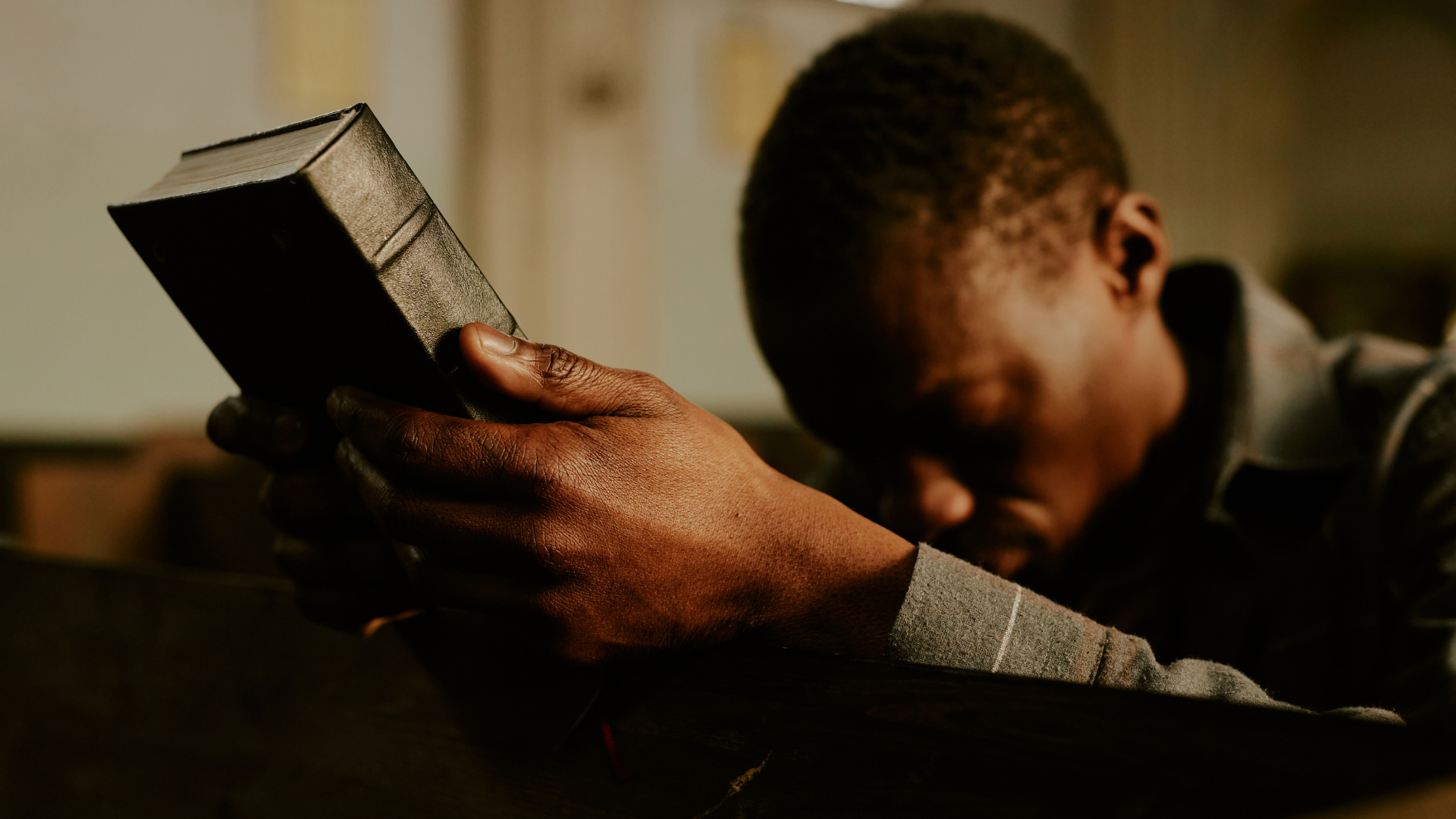
So it was with Hezekiah. When Isaiah delivered the devastating message of his impending death, the king cried out to God to remember his faithfulness and pleaded for his life. He made it his business to pray for himself. God heard, and in mercy granted him fifteen more years.
Hezekiah’s Pride and Indifference
Not long after his recovery, envoys from Babylon visited to congratulate Hezekiah.
Isaiah 39:1-8
1 At that time Merodach-baladan the son of Baladan, king of Babylon, sent envoys with letters and a present to Hezekiah, for he heard that he had been sick and had recovered.
2 And Hezekiah welcomed them gladly. And he showed them his treasure house, the silver, the gold, the spices, the precious oil, his whole armory, all that was found in his storehouses. There was nothing in his house or in all his realm that Hezekiah did not show them (vv. 1-2).
In pride, Hezekiah displayed to them all his treasures and the wealth of his kingdom. This arrogance displeased God, and once again God sent Isaiah—this time with a message of judgment.
3 Then Isaiah the prophet came to King Hezekiah, and said to him, “What did these men say? And from where did they come to you?” Hezekiah said, “They have come to me from a far country, from Babylon.”
4 He said, “What have they seen in your house?” Hezekiah answered, “They have seen all that is in my house. There is nothing in my storehouses that I did not show them” (vv. 3-4).
In those days, without mechanized transport, it took about four months for a journey of approximately 900 miles from Babylon to Jerusalem. So when Hezekiah showed off all the kingdom’s wealth to the Babylonians, he must have thought they posed no threat to Jerusalem, considering the geographic distance between the two kingdoms. But then came God’s judgement.
5 Then Isaiah said to Hezekiah, “Hear the word of the Lord of hosts:
6 Behold, the days are coming, when all that is in your house, and that which your fathers have stored up till this day, shall be carried to Babylon. Nothing shall be left, says the Lord.
7 And some of your own sons, who will come from you, whom you will father, shall be taken away, and they shall be eunuchs in the palace of the king of Babylon” (vv. 5-7).
At this news, one might expect Hezekiah to humble himself, make it his business and intercede for his nation, just as he had once prayed for his own life. He didn’t. Instead, his response revealed his indifference.
8 Then Hezekiah said to Isaiah, “The word of the Lord that you have spoken is good.” For he thought, “There will be peace and security in my days” (v. 8).
This posture—being concerned only with present comfort while ignoring future consequences—is what I want to call the “Hezekiah Attitude”. As long as my life is good now, I do not trouble myself with what happens elsewhere. Hezekiah thought, as long as the exile of the nation and plundering of the kingdom’s treasures did not happen on his watch, he was good.
And as the Lord had foretold, judgment eventually came. About a century later, five generations from Hezekiah, Nebuchadnezzar king of Babylon, besieged Jerusalem, plundered the temple and the king’s house, carried off all the treasures, and took Hezekiah’s descendants into captivity, making some eunuchs. He also burned the Lord’s temple and the king’s palace, leaving Jerusalem in ruins (2 Kings 24–25).
Lesson for Us
Hezekiah’s two responses reveal a stark contrast. When danger was immediate and personal, he made it his business to cry out to God. But when the consequences were distant and would affect others, he chose apathy. Many of us fall into the same trap of the “Hezekiah Attitude”. We refuse or neglect to interest ourselves in matters that do not have an immediate effect on us. We are indifferent to the consequences of our sin, our kids, our neighbors, and the Church of Christ.
When Scripture or the Holy Spirit convicts us of sin, we sometimes think: “As long as the consequences are not immediate, I need not deal with my sin.” But we know that the wages of ignored, unrepented sin is death. And the consequences eventually come—for us or for the generations that follow.
What does God require of us? It is this: “Today, if you hear His voice, do not harden your hearts” (Heb 4:7). Make it your business to repent.
Examples of People Who “Made it Their Business”
Unlike Hezekiah, Scripture gives us many examples of people who made the needs of others their business before God.
Abraham interceded for Sodom in order to save Lot
While traveling to Sodom, the LORD and two angels stopped by Abraham’s place, and he showed them hospitality. But before they continued on their journey, the LORD informed Abraham of His plans for Sodom.
Genesis 18:20, 22-33
20 Then the Lord said, “Because the outcry against Sodom and Gomorrah is great and their sin is very grave,
21 I will go down to see whether they have done altogether according to the outcry that has come to me. And if not, I will know” (vv. 20-21).
The LORD didn’t tell Abraham what He would do after verifying the outcry about the two cities. But Abraham knew what the Lord was going to find. He understood the impending doom, so he promptly made it his business and interceded for Sodom, the city in which his nephew Lot and his family lived.
You don’t have to be in the situation to make it your business to intercede.
22 So the men turned from there and went toward Sodom, but Abraham still stood before the Lord.
23 Then Abraham drew near and said, “Will you indeed sweep away the righteous with the wicked?
24 Suppose there are fifty righteous within the city. Will you then sweep away the place and not spare it for the fifty righteous who are in it?
… 26 And the Lord said, “If I find at Sodom fifty righteous in the city, I will spare the whole place for their sake.”
From 50 to 10, Abraham pleaded with God not to destroy the righteous with the wicked.
... 32 Then he said, “Oh let not the Lord be angry, and I will speak again but this once. Suppose ten are found there.” He answered, “For the sake of ten I will not destroy it” (v. 32).
God found only four. He destroyed the two cities but remembered Abraham’s prayer and spared Lot’s family.
29 So it was that, when God destroyed the cities of the valley, God remembered Abraham and sent Lot out of the midst of the overthrow when he overthrew the cities in which Lot had lived (Genesis 19:29).

You don’t have to be in the situation to make it your business to intercede.
Moses interceded for Israel during their exodus from Egypt
When Moses went to the mountain to meet God and was delayed, Aaron and the people of Israel sinned by making a golden calf and worshipping it. God’s anger arose, and He declared His intent to destroy them and made a proposition to Moses:
You don’t have to be part of the problem to make it your business before God.
Exodus 32:9-10
9 And the Lord said to Moses, “I have seen this people, and behold, it is a stiff-necked people.
10 Now therefore let me alone, that my wrath may burn hot against them and I may consume them, in order that I may make a great nation of you.”
Now suppose that Moses had the “Hezekiah Attitude,” he could have replied this way: “Yes, Lord, please do it. Destroy them all and make a great nation out of me. Besides complaining and quarreling, they’ve talked about stoning me before. Please, God, finish them.”
But although there would be “peace and security” for Moses and his family, he refused to think only of himself. He made it his business and pleaded for Israel, reminding God of His promises to Abraham, Isaac, and Jacob. In response, the Lord relented from destroying them.
Exodus 32:11-14
11 But Moses implored the Lord his God and said, “O Lord, why does your wrath burn hot against your people, whom you have brought out of the land of Egypt with great power and with a mighty hand?
12 Why should the Egyptians say, ‘With evil intent did he bring them out, to kill them in the mountains and to consume them from the face of the earth’? Turn from your burning anger and relent from this disaster against your people.
13 Remember Abraham, Isaac, and Israel, your servants, to whom you swore by your own self, and said to them, ‘I will multiply your offspring as the stars of heaven, and all this land that I have promised I will give to your offspring, and they shall inherit it forever.’”
14 And the Lord relented from the disaster that he had spoken of bringing on his people.

You don’t have to be part of the problem to make it your business before God.
Daniel interceded for captive Israel in Babylon
While in Babylonian captivity, Daniel understood from Jeremiah’s prophecy that the seventy years of exile were nearing an end. This knowledge moved Daniel to make it his business to turn to God in fasting and prayer, confessing the sins of Israel and pleading for mercy for Israel to be released from captivity.
Daniel 9:16-19
16 “O Lord, according to all your righteous acts, let your anger and your wrath turn away from your city Jerusalem, your holy hill, because for our sins, and for the iniquities of our fathers, Jerusalem and your people have become a byword among all who are around us.
17 Now therefore, O our God, listen to the prayer of your servant and to his pleas for mercy, and for your own sake, O Lord, make your face to shine upon your sanctuary, which is desolate.
18 O my God, incline your ear and hear. Open your eyes and see our desolations, and the city that is called by your name. For we do not present our pleas before you because of our righteousness, but because of your great mercy.
19 O Lord, hear; O Lord, forgive. O Lord, pay attention and act. Delay not, for your own sake, O my God, because your city and your people are called by your name.”
You don’t have to be a direct benefactor to make it your business before God.
Ezra’s account confirms that in 538 BC, God moved Cyrus, king of Persia, to decree the return of Jewish exiles to Jerusalem to rebuild their temple and city. Cyrus also returned the vessels of the house of the Lord that Nebuchadnezzar had taken from Jerusalem.
Though Daniel was the one who interceded, he never returned with the exiles. He died in Babylon.
You don’t have to be a direct benefactor to make it your business before God.
Friends of the paralytic
One day Jesus was teaching in a house, and some men brought their paralytic friend to be healed by Jesus. Unable to reach Him because of the crowd, the men made it their business and improvised another way to get their sick friend to Jesus.
Luke 5:18-20
18 And behold, some men were bringing on a bed a man who was paralyzed, and they were seeking to bring him in and lay him before Jesus,
19 but finding no way to bring him in, because of the crowd, they went up on the roof and let him down with his bed through the tiles into the midst before Jesus.
20 And when he saw their faith, he said, “Man, your sins are forgiven you.”
Jesus acknowledged the faith these men showed in bringing their companion to be healed. Their faith on his behalf made the difference. Your faith on someone else’s behalf can make a difference; you just have to make it your business to care.
It doesn’t need to be about you to make it your business to go before God.
Make it Your Business
We must make certain things our business before God.
Make it your business to love your neighbor. Your neighbor doesn’t have to look like you. They don’t have to speak your language. They don’t have to think like you do. They simply have to be created Imago Dei.
Make it your business to care for the brethren. If one of your family members doesn’t come home for a few days, you would file a missing person’s report with the authorities. But what do we do when a brother or sister in Christ goes missing from fellowship? We should make it our business to check on them and pray for them.
It doesn’t need to be about you to make it your business to go before God.
Make it your business to train your kids in the way of Christ. Scripture says: “A good man leaves an inheritance to his children’s children” (Prov 13:22). More valuable than wealth is a spiritual inheritance–passing onto your children the knowledge of God.
Make it your business to be involved in your children’s learning. If you do not shape your children’s worldview through God’s truth, someone else will, through worldly deceptions. Let their education begin at home, around the dinner table.
Make it your business to walk in the light. We often talk about revivals. But revival begins in believers’ hearts, then in families, then in communities, until it spreads across a nation.
Make it your business to advance God’s kingdom in the time you’ve left. There is a set date and time when we will be called home by our Lord. Will you then hear, “Well done, my good and faithful servant or, you wicked and lazy servant?” Jesus gave the Great Commission to all His disciples. With whatever means God would have you use, advance His kingdom.
If Christ is not Lord in your life, Scripture says, “If you confess with your mouth that Jesus is Lord and believe in your heart that God raised Him from the dead, you will be saved” (Rom 10:9). Make it your business to follow Jesus today.
While many like Hezekiah say, “There is peace and security in our days,” the King will return.
Amen
