
Jesus traveled from town to town teaching, and wherever He went, crowds followed him. In the crowds were those who believed His words while others were merely fascinated. The believing part of the crowd, mostly Jews, were known as his disciples. This distinction matters because Jesus often addressed the crowds and the disciples differently.
He taught publicly, but He explained deeper truths privately to those who followed Him closely. Scripture says He explained many parables to his disciples that he had told openly to the crowds (Matt. 13:34-35).
In John 6, Jesus declares that He is the bread of life.
“35 Then Jesus declared, “I am the bread of life. Whoever comes to me will never go hungry, and whoever believes in me will never be thirsty. 36 But as I told you, you have seen me and still you do not believe. 37 All those the Father gives me will come to me, and whoever comes to me I will never drive away. 38 For I have come down from heaven not to do my will but to do the will of him who sent me. 39 And this is the will of him who sent me, that I shall lose none of all those he has given me, but raise them up at the last day. 40 For my Father’s will is that everyone who looks to the Son and believes in him shall have eternal life, and I will raise them up at the last day.” 41 At this the Jews there began to grumble about him because he said, “I am the bread that came down from heaven.” 42 They said, “Is this not Jesus, the son of Joseph, whose father and mother we know? How can he now say, ‘I came down from heaven’?”43 “Stop grumbling among yourselves,” Jesus answered.” —(John 6:35-42, NIV)
When Jesus said this, the non believing Jews in the crowds started grumbling and got uncomfortable with Jesus’s teaching because He said that, “I am bread that came down from heaven.” They were offended or “triggered” by two central claims:
- Jesus is the bread of life.
- Jesus came down from heaven, which affirmed His divinity.
Before this, these same people were perfectly comfortable with Jesus’ works. Just a few verses earlier in the same chapter, Jesus had fed thousands with bread and fish—and you can be sure that many of the now‑offended Jews were part of that crowd, if not all of them.
They were perfectly fine eating food miraculously multiplied, but they stumbled over the identity of the One who performed the miracle. They welcomed the gift but resisted the Giver.
At this point, the disciples themselves were not offended. They had not joined the crowd in grumbling or questioning Jesus. But Jesus pressed further—He took them deeper—and said:
“51 I am the living bread that came down from heaven. Whoever eats this bread will live forever. This bread is my flesh, which I will give for the life of the world.”52 Then the Jews began to argue sharply among themselves, “How can this man give us his flesh to eat?”53 Jesus said to them, “Very truly I tell you, unless you eat the flesh of the Son of Man and drink his blood, you have no life in you. 54 Whoever eats my flesh and drinks my blood has eternal life, and I will raise them up at the last day. “ —(John 6:52-54, NIV)
Earlier, the non-believing Jews were offended when Jesus taught that He is the bread of life that came down from heaven while the disciple remained resolute. But now even some of the disciples got offended because Jesus spoke of eating His flesh and drinking His blood.
“On hearing it, many of his disciples said, “This is a hard teaching. Who can accept it?” —(John 6:60, NIV)
Even sincere followers can struggle when Jesus’ words confront their assumptions.
The “crowd” today includes everyone who has heard the message of Christ, believers and those who haven’t believed. Many of the non-believing crowd accept certain teachings of Christ like love, kindness, compassion—while rejecting others such as: His exclusivity as Savior, Biblical morality, Christ’s divine identity among others.
The people who hear the gospel and like parts of it while rejecting the other bits, are not comfortable to believe Jesus as Lord and Savior because they are offended by most of His teaching.
Just like the disciples who were not offended at first, many Christians stay in Christ as they learn more of Him until they encounter some of Jesus’ teaching that starts to confront their positions and assumptions. At this, they too get offended by the gospel. These Christians find it difficult believing Jesus’ teaching on: holiness, purity, forgiveness, marriage, self‑denial, etc. These are not optional; they are part of Christ’s Lordship.
And like some of the disciples, many Christians are saying, “These are hard teachings.”
The Real Question: How Do We Respond?
The issue is not whether Jesus’ teachings are hard. They are. The real question is how we respond when His words challenge us. The things Jesus requires of a Christian are not easy.
Jesus requires Christians to deny themselves, carry their crosses and follow him (Matt. 16:24). He requires Christians to live pure and holy lives just as He is holy (1 Pet. 1:16). Jesus requires Christian husbands to love their wives as He himself has loved the Church and wives to submit to their husbands as they would submit to Him (Eph. 5:22-33). He requires Christians to forgive those who sin against them or else our own sins will not be forgiven either (Matt. 6:14-15).
These are all hard teachings. So again, the issue is not whether Jesus’ teachings are hard. The issue is how you answer the question that the disciples asked in John 6: 60, “Who can accept it?”
Your answer to this question shows where you stand with Christ on his instructions. Do you accept it?
Or are you offended?
“Aware that his disciples were grumbling about this, Jesus said to them, “Does this offend you?” —John 6:61
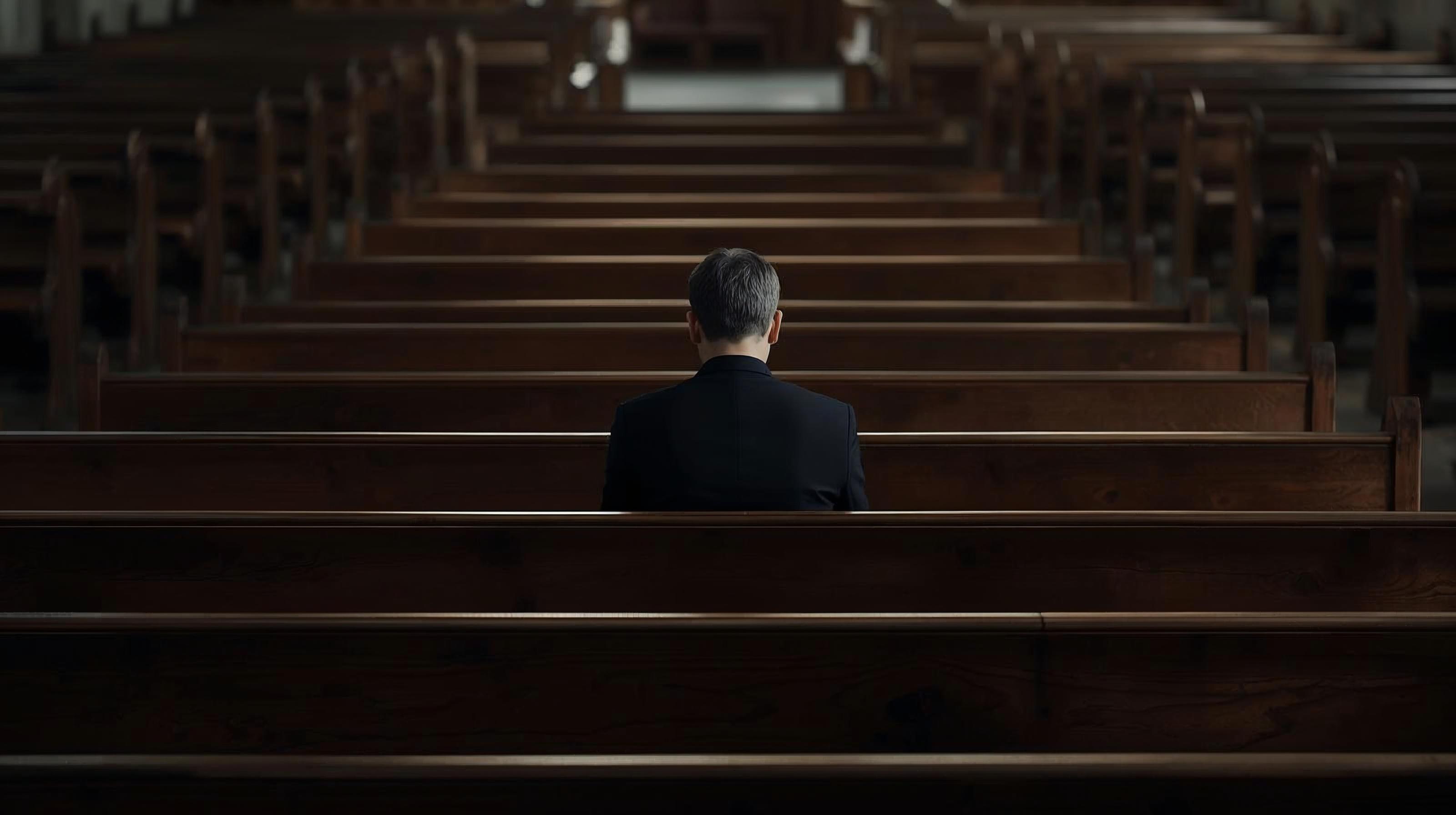
Jesus didn’t ask the whole crowd if they were offended. Scripture says He turned to his disciples, those who had followed Him closely, the ones who were supposed to know more because they believed in Him. This is the professing Christians seated in Church pews today. Does Jesus’ teaching offend you?
Scripture teaches in 1 Corinthians 1:18 that, “The preaching of the cross is to them that perish foolishness; but unto us which are saved it is the power of God.” Jesus didn’t ask the whole crowd if they were offended but only His disciples because He was aware of this truth. His teaching was foolishness to the non-believing crowd, He knew they would be offended. But unto His disciples, Christians saved by grace, the teaching of Jesus is supposed to be the power of God.
Unapologetic For The Truth
Therefore, when Jesus heard His disciples grumble, He was unapologetic. He did not soften His message to make it easier to accept or excuse its difficulty. Instead, He turned to them as if to say, “I know this teaching is hard—but does it offend you?” He expected His followers to trust Him even when His words cut against their preferences.
At this, many of His disciples—offended and unwilling to accept His teaching—turned away from Him. Scripture records the tragedy: “From this time many of his disciples turned back and no longer followed him.” —John 6:66
Many Christians have been offended by Jesus’ teaching and cannot accept it. Like the disciples who turned back, they too have walked away from following Christ. Today, this process is often called “Christian deconstruction”—a rethinking and re‑examining of the foundations of the Christian faith that, more often than not, leads people to depart from the faith altogether instead of deeper into it.
And where do deconstructing Christians go? Many turn to belief systems that seem more appealing—systems that promise inclusivity, comfort, and teachings that never confront or offend. A prominent example is “progressive Christianity,” a postmodern approach that reduces the authority of Scripture and opens the essential doctrines of the faith to constant reinterpretation.
In progressive Christianity, the Gospel undergoes a shift. The biblical message of sin, repentance, and redemption is replaced with a different gospel—one that prioritizes social justice and elevates personal or societal feelings above the authority of Scripture. Within this framework, many embrace redefinitions of marriage, sexuality, and morality. Other disciples who turn away from Christ pursue alternative world religions, while some abandon belief altogether and embrace atheism.
When we become followers of Christ, we step into a Master‑servant relationship. Christ is the Master who sets the direction, defines the path, and leads the way. His Word becomes the lamp that guides our feet and the light that shapes our entire walk (Ps. 119:105).
As an example, we cannot build our faith the way we build a pizza at our favorite pizza shop. At a pizza shop, you start with a standard crust and then add whatever toppings you prefer. But Jesus doesn’t give us a blank template and says, “There—customize your faith however you like.” Jesus sets everything. He defines the path, the truth, the doctrine, and the life. Hebrews 12:2 reminds us that Jesus is the Author of our faith, and He is also the Finisher and Perfecter of that same faith.
This means that if Christ’s words offend you, He is not the one who must change—you are. Set aside your assumptions, your comforts, and your feelings, and keep following Him. Don’t turn back. Stay with Christ, just like the twelve disciples who remained.
You would think Christ would look at those who stayed and say, “Well done.” But that’s not what He does. When you stay, Jesus turns to you—not to congratulate you, but to press the truth even further into your heart.
“Then Jesus asked the Twelve, “You do not want to leave too, do you?”“ —John 6:66-67
With the many enticing alternatives in our culture to which countless Christians are turning, Jesus is asking you who have stayed with Him this far, “You do not want to leave too, do you?”
Some Christians are sitting on the edge of their seats, waiting for that one message from the preacher that touches an area they have already decided is offensive, and when they hear it, they will leave.
How will you respond to Jesus’ question? My prayer is that your response will echo Simon Peter’s conviction:
“Lord, to whom shall we go? You have the words of eternal life. 69 We have come to believe and to know that you are the Holy One of God.” —John 6:68-69
Many have turned away from Christ, but for us who remain, may our response be: “Lord, to whom shall we go? You have the words of eternal life. We have come to believe and to know that You are the Holy One of God.”
Where else could you go to find eternal life? What have you come to believe about Christ? Do you truly know who He is? If you believe that Christ is God, that He saves us from our sins and from God’s wrath, and that He alone gives eternal life, then you must remain in Him.
Jesus’ teachings are not always easy to receive, but He alone offers eternal life. My prayer is that we would trust His hard words—the words that confront our sin, correct, and give life—rather than embrace the easy, agreeable, non‑offensive messages that lead to eternal damnation.
Do you accept Christ’s hard teaching?
Amen
