
A servant is one who performs duties for another. In God’s kingdom, He uses Christians—His children—to serve Him and others by carrying out His will. God chooses and appoints believers to service according to their individual gifting. Where God finds His servants and the qualities they must possess is the focus of this teaching.
First Case Study: Moses and the Judges
The first case involves Moses, the leader of Israel during their exodus from Egypt. Exodus 18:13–26 records how Moses alone judged Israel, settling disputes and teaching God’s statutes. When Jethro, his father‑in‑law, observed Moses doing this all day, he rebuked him and offered counsel:
“19 Now obey my voice; I will give you advice, and God be with you! You shall represent the people before God and bring their cases to God, 20 and you shall warn them about the statutes and the laws, and make them know the way in which they must walk and what they must do. 21 Moreover, look for able men from all the people, men who fear God, who are trustworthy and hate a bribe, and place such men over the people as chiefs of thousands, of hundreds, of fifties, and of tens. 22 And let them judge the people at all times. Every great matter they shall bring to you, but any small matter they shall decide themselves. So it will be easier for you, and they will bear the burden with you. 23 If you do this, God will direct you, you will be able to endure, and all this people also will go to their place in peace” (Exodus 18:19-23).
Jethro instructed Moses to appoint men who would help administer justice. He also made clear where Moses should find them and what qualities marked them as ready for service.
Found Within The Congregation
Moses was told to look “from all the people” (v. 21). He was not to seek help outside the community he led out of Egypt. He was to find help from all the people. Jethro could have advised Moses to look for help from the neighboring communities since the whole Israelite group had come out of slavery and likely lacked formal leadership experience. But God had already placed qualified men among them. Moses simply needed to identify and appoint them. Moses harkened to the voice of his father-in-law and did as instructed.
Ready for Service
Jethro also outlined the qualities that revealed readiness for leadership. If any man had these qualities, they were ready to serve the people as judges (Exodus 18:21). The qualities were :
- Ability
- Fear of God, and
- Trustworthiness
These men were already present in the multitude. Training develops skill, but readiness is formed long before appointment. Even in slavery, these men must have been growing. When Moses needed help, they were prepared to step in, judging smaller matters and bringing only difficult cases to Moses (Exodus 18:25–26).
Second Case Study: The Seven in Acts 6
Acts 6 presents another moment of identifying ready servants.
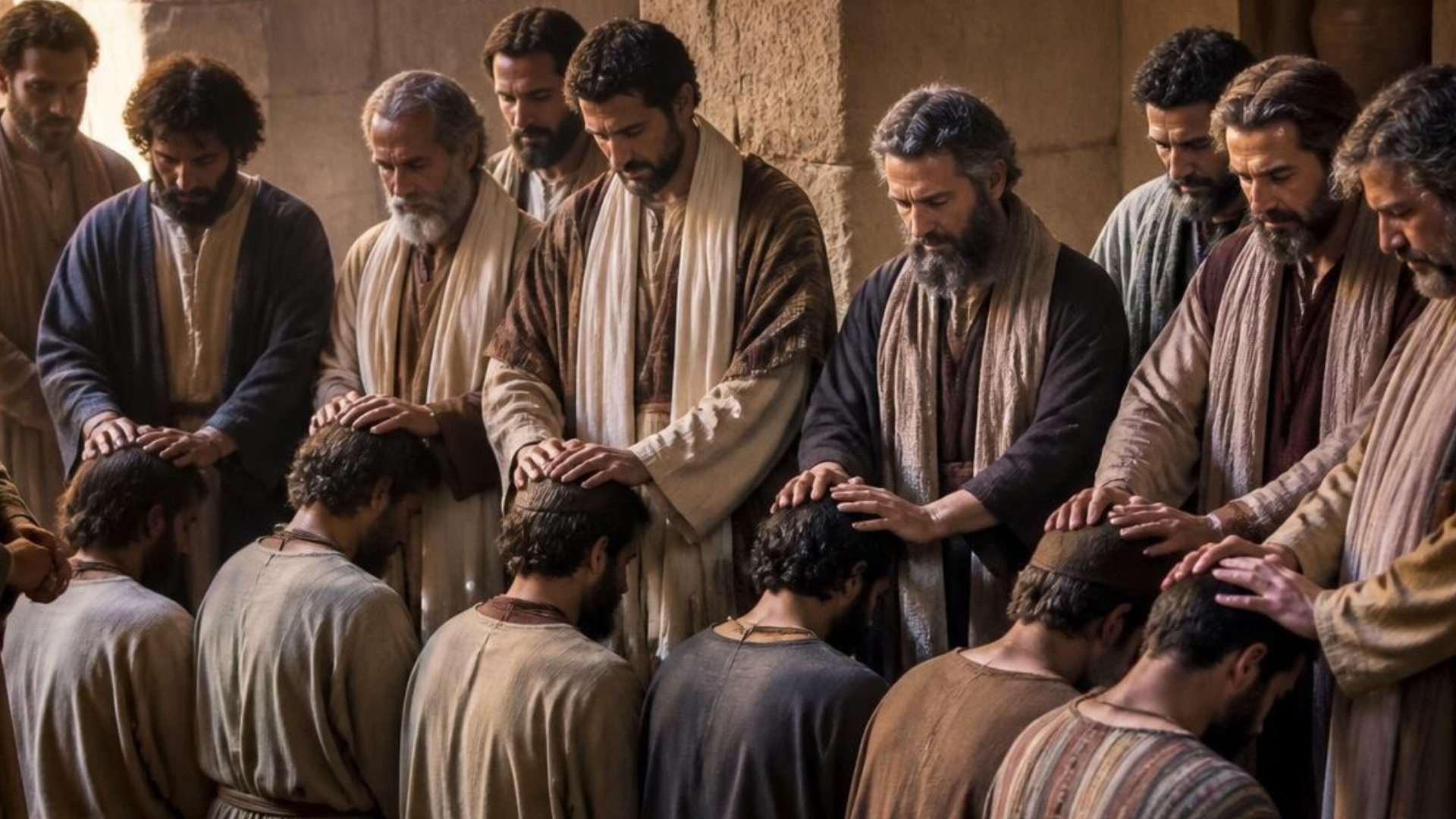
“Now in these days when the disciples were increasing in number, a complaint by the Hellenists arose against the Hebrews because their widows were being neglected in the daily distribution. 2 And the twelve summoned the full number of the disciples and said, “It is not right that we should give up preaching the word of God to serve tables. 3 Therefore, brothers, pick out from among you seven men of good repute, full of the Spirit and of wisdom, whom we will appoint to this duty. 4 But we will devote ourselves to prayer and to the ministry of the word.” 5 And what they said pleased the whole gathering, and they chose Stephen, a man full of faith and of the Holy Spirit, and Philip, and Prochorus, and Nicanor, and Timon, and Parmenas, and Nicolaus, a proselyte of Antioch. 6 These they set before the apostles, and they prayed and laid their hands on them” (Acts 6:1–6).
Hellenists were diasporian Jews who had integrated Greek language, culture and customs into their lives. Hebraic Jews were Jews who strictly maintained traditional Jewish customs, laws, and languages, deliberately resisting the influence of Greek culture.
When the apostles caught wind of the favoritism, they called the whole congregation together and tasked them to pick out qualified men with qualities to lead the food distribution ministry.
Picked From Among the Disciples
Again, the servants were chosen from within the believing community with the Apostles instructing, “Therefore, brothers, pick out from among you seven men” (Acts 6:3). The apostles did not ask the congregation to outsource the ministry to unbelievers. Those who served tables were to be fellow disciples who already possessed the necessary qualities.
Ready to Serve
The twelve apostles tasked the other disciples to pick out men who were:
- Of good reputation,
- Full of the Spirit and wisdom
- Full of faith (Acts 6:3).
They were not selecting men to begin training in these traits. Rather, they were choosing men who already lived them. The apostles did not pass around a volunteer sign‑up sheet for names and email addresses.. They asked the congregation to identify service‑ready men already sitting among them.
Examining Yourself
Are you a ready servant? Do you have traits of a ready servant?
Ability. Do you possess a skill or means to serve God’s kingdom?
The fear of God. Do you revere God for who He is and what he has done?
Trustworthiness. Are you dependable?
Good reputation. Who do believers know you to be?
Wisdom and Spirit filled. Are you guided by the Holy Spirit, and is He the source of your wisdom?
Full of Faith. Is Christ the source of your hope?
Qualified for One, Ready for More
If you have ability, fear God, are trustworthy, full of faith, filled with the Spirit, and wise, you are qualified for ministry. And when you are qualified for one ministry, you may also be ready for others God assigns.
The Holy Spirit gives gifts for ministry in the church. We do not serve by our own power or earthly wisdom, but by His Spirit.
Stephen, one of the seven chosen to serve tables, was later described in Acts 6 as, “full of grace and power,” performing “great wonders and signs among the people,” and speaking with wisdom and the Spirit (Acts 6:8, 10).
The same Spirit who enabled him to serve tables empowered him to preach Christ and perform miracles. Same Spirit, different gifts (1 Corinthians 12:4–11). Stephen’s powerful speech in defense of Christ before the high priest convicted and enraged those who heard that they led him out of the city and stoned him to death, making him the first Christian martyr (Acts 7:54–58).
Philip, also among the seven, later preached Christ in Samaria, healed the sick, cast out demons, and brought great joy to the city (Acts 8:4–8)
“Now those who were scattered went about preaching the word. 5 Philip went down to the city of Samaria and proclaimed to them the Christ. 6 And the crowds with one accord paid attention to what was being said by Philip, when they heard him and saw the signs that he did. 7 For unclean spirits, crying out with a loud voice, came out of many who had them, and many who were paralyzed or lame were healed. 8 So there was much joy in that city” (Acts 8:4–8 ).
He then preached the gospel to the Ethiopian eunuch who was on his way from worshiping in Jerusalem. The Ethiopian was reading the book of Isaiah when Phillip ran to him and asked him if he understood what he was reading. After the eunuch admitted that he didn’t understand, Phillip preached the gospel to him and baptised him (Acts 8:26-40).
This event is believed to be fundamental as it marks the early instances of the gospel reaching gentiles in Africa because the Ethiopian went back with the good news of Jesus Christ.
Phillip the evangelist did not only have the anointing for the daily distribution of food, but also of preaching the word and working miracles. Same Spirit, different gifts (1 Corinthians 12:4–11).
Respond to the Call
The men chosen in both cases did not reject their calling because of the task’s size.or importance. They responded because of the One who called. Moses represented God to Israel, and the Holy Spirit was present in the early church. These men served because God called.
Do not despise the call to ministry and where God places you to serve. Do not despise small beginnings of service in God’s kingdom. If God places you somewhere, that is where He wants you to serve. And when He wills that you move to another ministry, He equips you through His Spirit.
The seven who served tables did not complain about their ministry. They carried it out with diligence, in the Spirit and wisdom, and the church stayed in unity. No ministry is small before God.
Are you ready to serve wherever the Lord would place you?
Be that ready servant.
Amen
